SELECTED PROJECTS
Research-led exhibitions and site-responsive installations across galleries, museums, landscapes, and archives
-
![An art gallery room featuring various artworks, including paintings on the walls and a large, colorful abstract painting. There is a glass display case with jewelry or small sculptures on a wooden floor, and a doorway leading to another exhibition space.]()
POSTNATURES
COMMISSIONED BY SHEFFIELD MUSEUMS TRUST
GRAVES GALLERY, SHEFFIELD
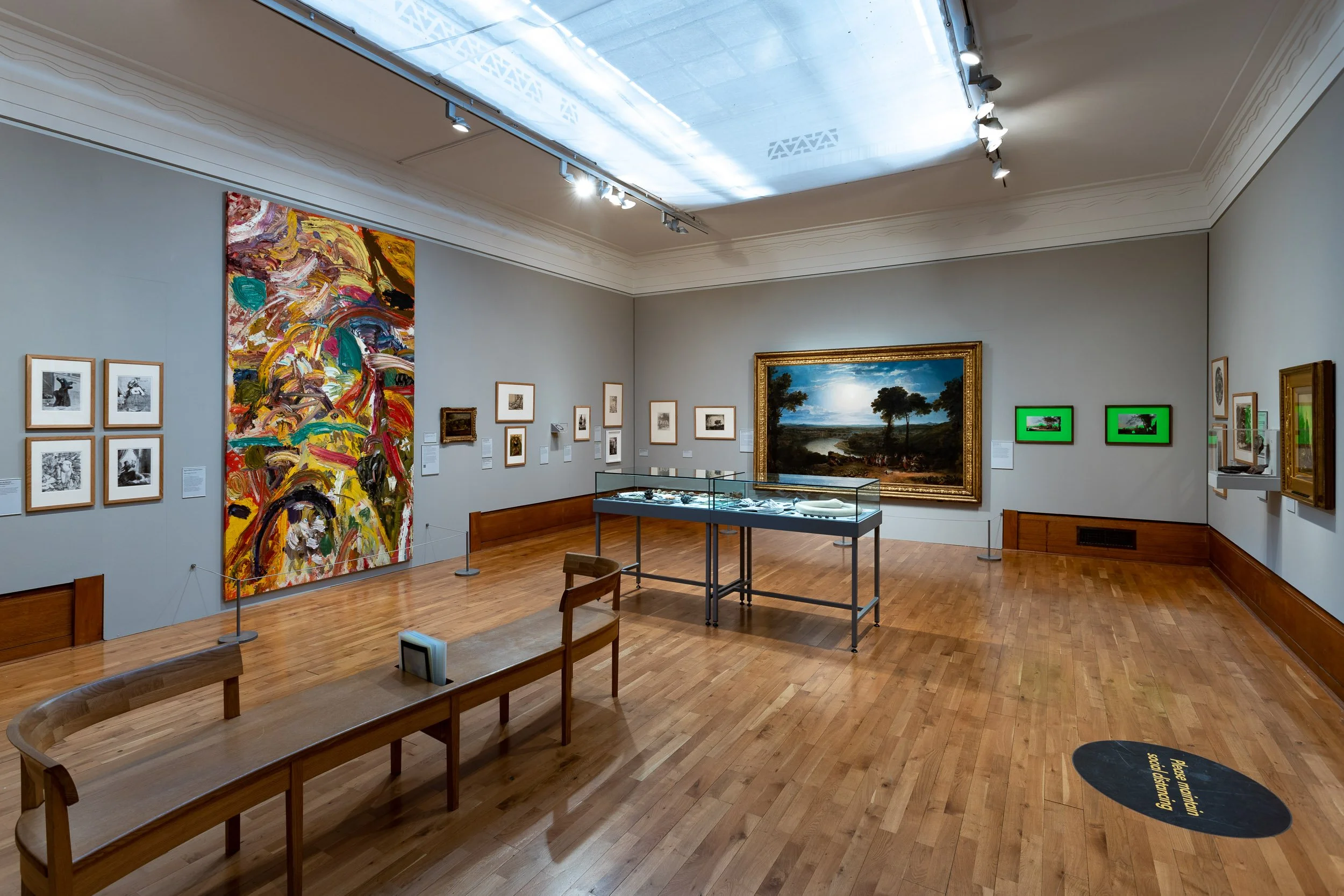
PostNatures was a research-led exhibition curated by Victoria Lucas at Graves Gallery, centred on J.M.W. Turner’s The Festival of the Opening of the Vintage at Mâcon. The exhibition drew on the constructed composition of Turner’s painting to examine how imagined landscapes shape cultural perceptions of nature, gender, and reality. Bringing together artworks and objects from Sheffield’s collections alongside contemporary works, the project explored representations of the relationship between women and nature, inviting new readings of landscape as a constructed and culturally mediated space.
The exhibition was developed through curatorial research and close engagement with the collection, resulting in a spatial installation combining historical works, new commissions, and moving image. Works were arranged to create visual and conceptual relationships across the gallery, enabling audiences to navigate connections between past and present. Through this approach, the project reinterpreted the collection within a contemporary context, extending traditional display formats and supporting a more immersive and critically engaged experience.
-
![Person lying face down on top of a large rock in a grassy field with distant hills.]()
RECLAMATION GROUND
MATERIAL RECKONING WITH GENDERED SUBJECTIVITY THROUGH SITE-RESPONSIVE ART PRACTICE
ART, DESIGN AND MEDIA RESEARCH CENTRE, SHEFFIELD HALLAM UNIVERSITY
Reclamation Ground is a practice-led PhD project that develops a research-led, site-responsive methodology for engaging with landscape as a complex intersection of ecological, cultural, and political forces. The research investigates how embodied encounters with site, combined with digital and material processes, can generate new ways of understanding relationships between human and more-than-human systems. Through this work, landscape is approached not as a static backdrop, but as an active and contested field shaped by extraction, transformation, and environmental change.
The project is structured through a repeatable process of encounter, extraction, material reckoning, and installation, moving between site, studio, and exhibition contexts. Fieldwork is documented through video, photography, and digital capture, before being transformed through processes of editing, distortion, and spatial construction. The resulting installations bring together moving image, sculptural elements, and sound to create immersive environments that translate complex research into embodied, public-facing experiences. This methodology underpins subsequent curatorial and artistic projects, providing a framework for working with collections, archives, and sites in institutional contexts.
-
![Six women standing outdoors on a muddy field with a rural landscape in the background, facing a woman on the right whose back is turned to the camera. The women are dressed in vintage-style clothing, some wearing rain boots, and appear to be participating in a rehearsal.]()
NATIONAL MEMORY - LOCAL STORIES
COMMISSIONED BY THE NATIONAL PORTRAIT GALLERY, LONDON
Forming a part of the National Memory – Local Stories programme, this project developed a video work in response to Redbridge Museum’s World War I collection and the National Portrait Gallery’s archive. The work engaged with archival material as a site of memory and representation, exploring how histories of conflict are constructed and experienced across institutional and local contexts. Through this approach, the project connected national narratives with personal and imagined histories, positioning the archive as an active space of interpretation.
The project developed through a structured process of archival encounters and site-based production. Archival research informed the development of a narrative framework, which was translated through storyboarding, direction, and collaboration with actors and a film crew. Filming took place on a disused coal mining site in Yorkshire, using landscape as a stand-in for the trench environment to create an atmospheric and embodied setting. The resulting video combined staged and symbolic sequences to rework archival material into a contemporary moving image piece. Through this process, the project extended my methodology into an archival and cinematic context, demonstrating how historical collections can be activated through site-based production and narrative construction to support public engagement and reinterpretation.
-
![]()
COALFIELDS
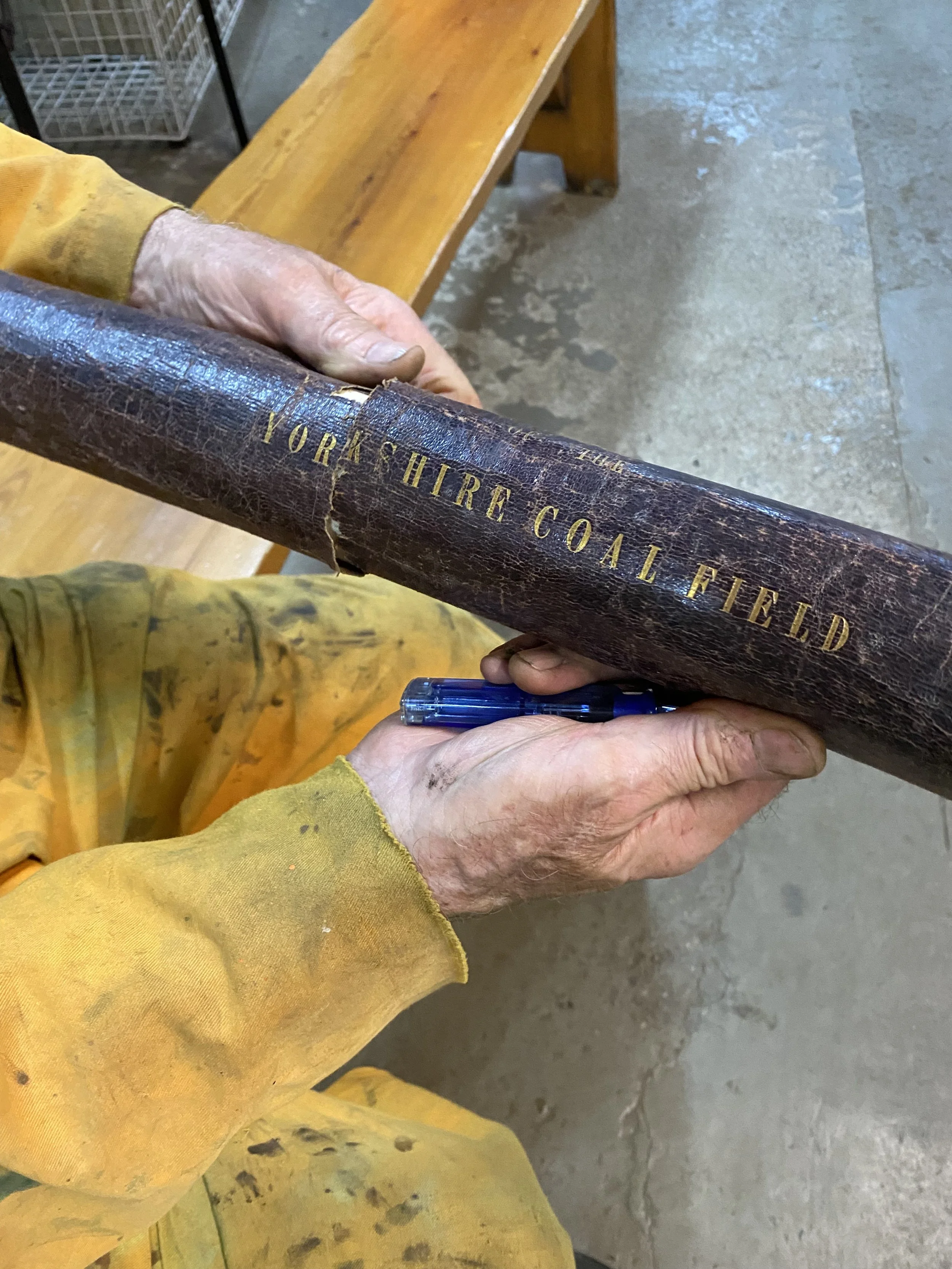
Coalfields is an ongoing body of site-responsive work developed through research at the Sedgwick Museum of Earth Sciences, National Coal Mining Museum for England and fieldwork across mythological landscapes such as the Delphi Museum in Greece and Hogberget Cave in Finland. Moving between underground and surface conditions, the project explores the physical and symbolic absences produced through coal extraction, where vast seams have been removed, leaving traces that continue to shape the land above.
Through sculpture, moving image, and archival intervention, the work translates these absences into material and spatial forms. Geological mapping, industrial histories, and embodied encounters with the mine are brought into dialogue with mythological and cultural narratives of the underworld, positioning extraction as both a physical process and a framework for understanding landscape.
Rather than documenting mining, Coalfields reinterprets its afterlives, where voids, residues, and altered terrains become active sites of meaning. In this way, the project considers coalfields as monuments to absence, where the legacy of extraction and combustion is inscribed into the ground as enduring markers of ecological degradation and climate crisis.
-
![Three people wearing hard hats and masks walking among piles of black aggregate at a processing facility with mountains in the background.]()
PITTINI STEEL WORKS
COMMISSIONED BY IODEPOSITO
FRIULI VENEZIA GIULIA REGION, ITALY
This research residency in the Friuli Venezia Giulia region of Italy engaged directly with industrial and post-industrial landscapes, including the Pittini steelworks in Osoppo and the former Raibl mines. The project focused on the material and spatial conditions of extraction, production, and transformation, examining how industrial processes shape both landscape and cultural experience. Through sustained site engagement, including walking, observation, and documentation within active and disused industrial environments, the work investigated the relationship between material, labour, and geological context.
The project developed through a structured process of site encounter, digital extraction, and studio-based transformation. Industrial environments were documented using video, photography, and 3D capture, treating these recordings as material to be worked through rather than simply observed. In the studio, this material was transformed through processes of editing, distortion, and spatial construction, resulting in installation-based works that translated industrial systems into immersive, embodied experiences. The residency extended my site-responsive methodology into an industrial context, strengthening my approach to working with material processes, extraction, and large-scale production environments.
-
![Three women engaged in a discussion at a panel or workshop, with an audience in front of them. They are seated in front of a landscape painting. One woman on the right in a yellow top appears to be speaking.]()
HEAVY WATER COLLECTIVE
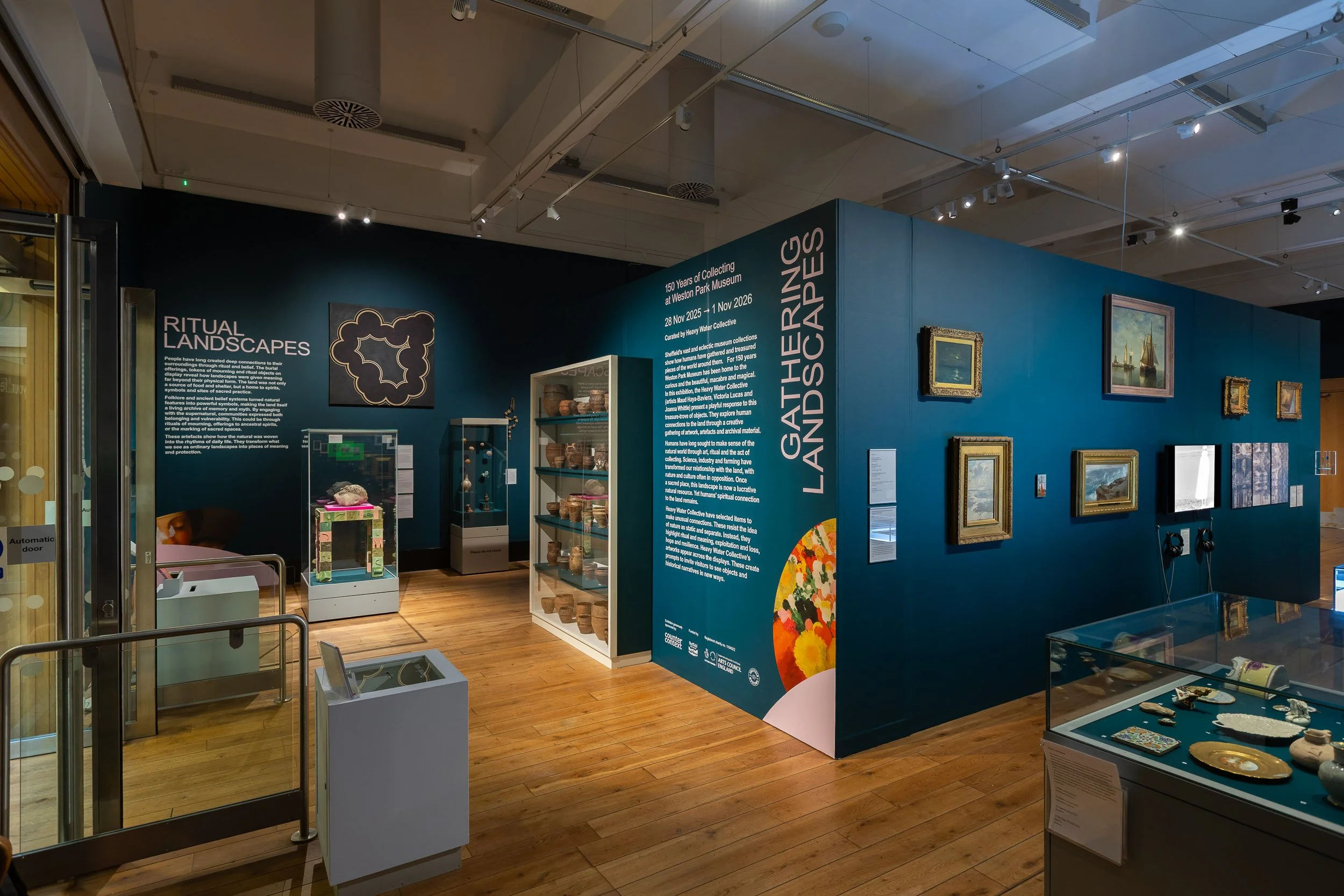
Heavy Water Collective is a curatorial project co-founded with Maud Haya-Baviera and Joanna Whittle, developing research-led exhibitions and projects in collaboration with museums, archives, and galleries. Working across archive and exhibition space, the collective activates collection material through contemporary artistic practice, combining archival research and material experimentation. Projects result in installations, events, and public programmes that recontextualise historical narratives, supporting institutions to engage audiences with complex material in accessible and spatially driven ways.
Heavy Water Collective has developed projects with museums, archives, and galleries across the UK, including Sheffield Museums Trust, Site Gallery (Sheffield), GroundWork Gallery (King’s Lynn), Hanover Project (Preston), and Sovereign Design House (Huddersfield). The collective has worked with collections and archives including the Sedgwick Museum of Earth Sciences (Cambridge), Lancashire Archives, Cardiff University Special Collections, Heritage Quay (Huddersfield), and Sheffield General Cemetery Trust, alongside delivering workshops, residencies, and public programmes with partners such as G39 (Cardiff), Künstlerhaus Dortmund, the Geological Society (London), Freelands Foundation, and the University of Huddersfield.



-
![Five people standing in front of a white wall with black abstract mural, outdoors, casual and semi-formal clothing.]()
FREELANDS ARTIST PROGRAMME
COMMISSIONED BY THE FREELANDS FOUNDATION, LONDON
SITE GALLERY, SHEFFIELD
The Freelands Artist Programme was a two-year residency supporting visual artists through collaboration with regional arts organisations. Based at Site Gallery, the programme provided a framework for developing research-led practice through peer exchange, mentoring, and public presentation. During this period, I developed a key body of work responding to a disused quarry site in the Peak District, using it as a context to explore relationships between landscape, extraction, and embodied experience. This work formed a central component of my ongoing PhD research, Reclamation Ground, establishing the foundations of my site-responsive methodology.
The project developed through sustained engagement with the quarry site, combining fieldwork, documentation, and material experimentation. Encounters with the site were recorded through video, photography, and sound, before being translated through studio-based processes of editing, layering, and spatial construction as exhibition. The residency enabled the development of a structured, repeatable methodology for working with landscape, which has since informed my curatorial and artistic practice across institutional contexts.
-
![]()
LAY OF THE LAND (AND OTHER SUCH MYTHS)
FUNDED BY ARTS COUNCIL ENGLAND
CALIFORNIA, USA
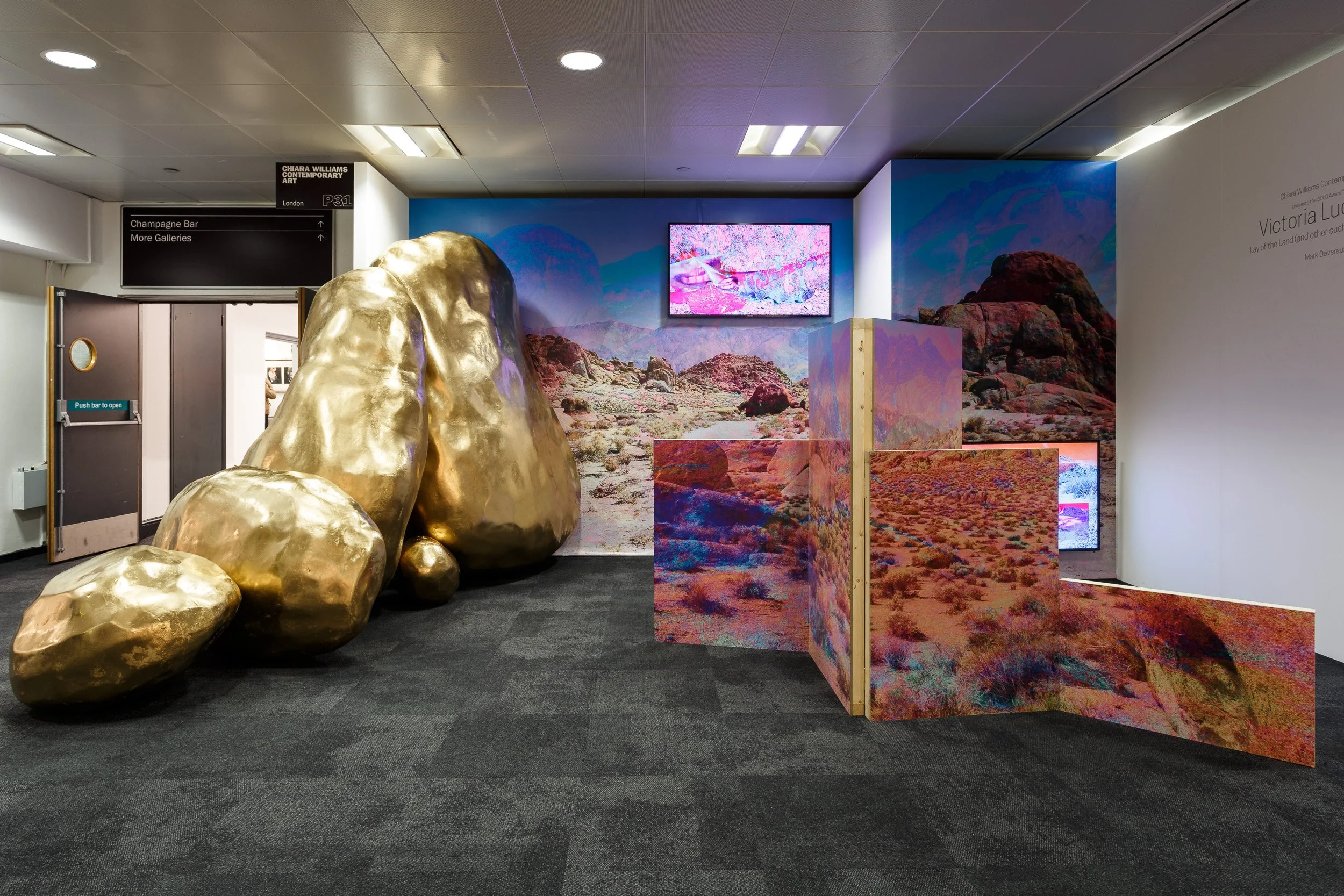
Lay of the Land (and other such myths) is a shapeshifting installation developed through a month-long residency in California, engaging with landscape as a site of myth, projection, and control. The project focused on locations that have been repeatedly represented within Hollywood cinema, including the Alabama Hills, examining how these mediated landscapes construct and reinforce narratives of female subjectivity. Through sustained site encounters, the work approached landscape as both a physical terrain and a cinematic construct, shaped by image-making, cultural projection, and lived experience.
The project developed through a structured process of site encounter, documentation, and studio-based transformation. Fieldwork involved walking and recording within desert locations, capturing moving image and photographic material as a form of extraction. This material was then translated through studio processes of editing, layering, and spatial construction, resulting in an installation combining moving image and sculptural elements. By contrasting embodied experience of the desert with its cinematic representation, the work examined how narratives of women are constructed, constrained, and reimagined within these landscapes. Through this process, the project demonstrates a repeatable site → extraction → studio → installation methodology, extending my practice into an international context while critically reframing the relationship between landscape, image, and identity.
-
![A camera screen displaying a woman's face with blue eyes and pink lipstick, with part of her face painted green around her nose and cheeks. She is wearing large black headphones.]()
NAYLAND ROCK HOTEL
CURATED BY CHIARA WILLIAMS AND SHAUN STAMP
NAYLAND ROCK HOTEL, MARGATE
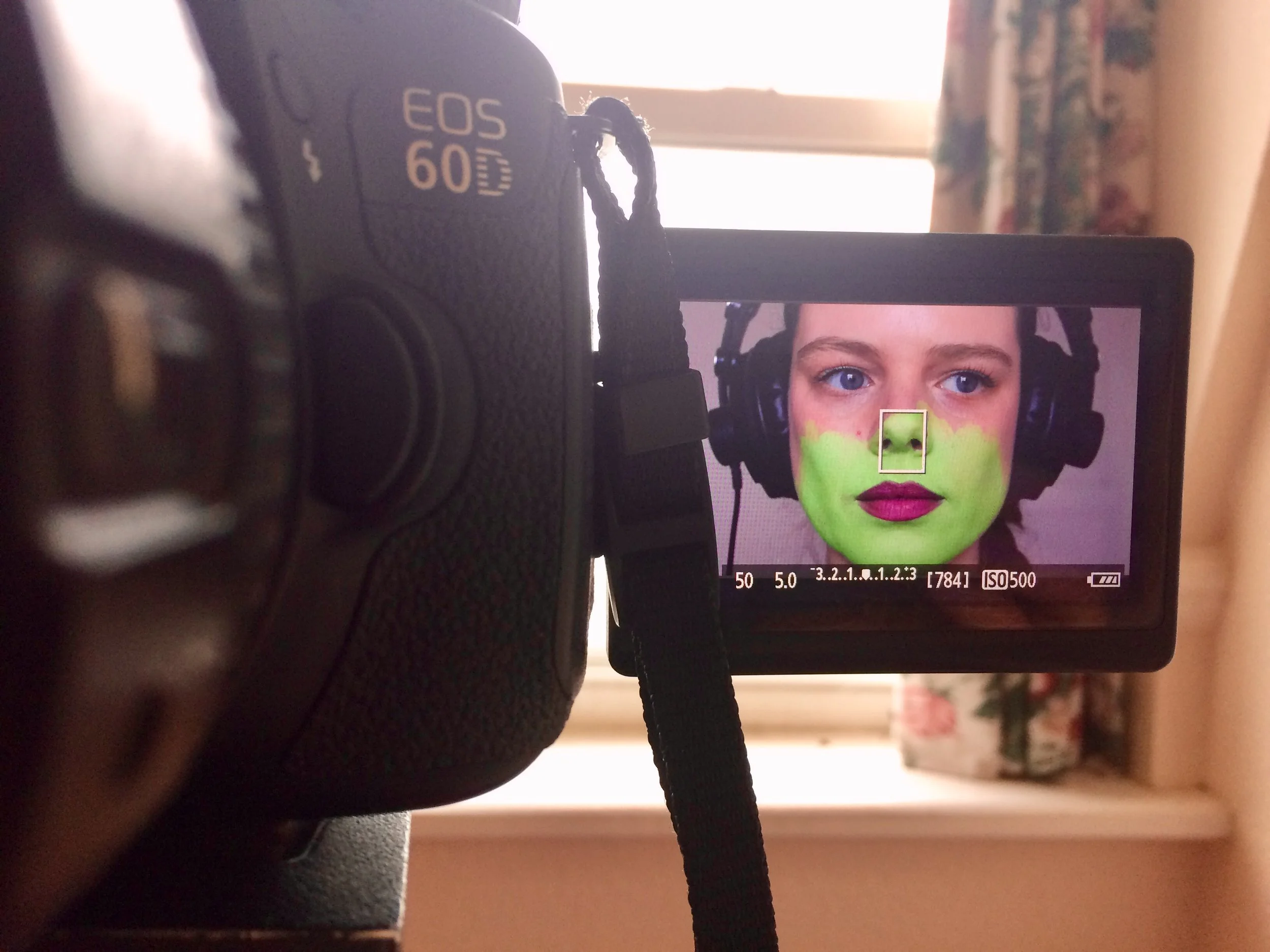
This residency and exhibition programme re-activated the disused Nayland Rock Hotel, a Grade II listed building on the Margate seafront, as a site for artistic production and public encounter. The project engaged with the building’s layered histories and coastal setting, exploring themes of myth, gender, and identity through a process of inhabiting and reinterpreting its interior spaces. Working across the hotel’s rooms, corridors, and surrounding landscape, the residency positioned the building as both a physical structure and a psychological environment shaped by memory, narrative, and cultural projection.
The work developed through site-based engagement, documenting and responding to the material and atmospheric qualities of the building and its coastal context. These encounters were translated through studio processes into installation-based works combining moving image, sculptural elements, and spatial intervention. The resulting video installation, Conversing with Tiresias, drew on T.S. Eliot’s The Waste Land alongside contemporary testimonies, using layered narrative and voice to examine myth, gender, and power. Through this approach, the work critically engaged with historical and contemporary representations of the female subjectivity, situating personal and collective experience within broader cultural and political frameworks. Installed within the hotel itself, the work operated in dialogue with the architecture, using the building as an active framework for presentation.
-
![A red neon sign on a building rooftop displays the words, "LOVE, LOVE WILL TEAR US APART AGAIN."]()
12 MONTHS OF NEON LOVE
FUNDED BY ARTS COUNCIL ENGLAND
NEON WORKSHOPS, WAKEFIELD
12 Months of Neon Love was a year-long public artwork developed by Victoria Lucas in collaboration with Richard William Wheater, installed in Wakefield and visible from the train line. The project engaged with the site as a transient viewing condition, where the work is encountered in motion and over time. Responding to the rhythms of travel and repetition, the installation explored how meaning is constructed through duration, visibility, and passing attention within a public landscape.
The work developed through a site-responsive approach, considering viewpoint, distance, and temporality as primary conditions. Neon text was installed and changed incrementally over a twelve-month period, creating a sequence of interventions that unfolded across time. Through this process, the project examined how language, light, and landscape interact within a public setting, demonstrating how site-responsive practice can operate through minimal but sustained interventions that build meaning through repetition and exposure.
-
![A white neon sign on a dark wall that reads 'quiet dust'.]()
QUIET DUST
COMMISSIONED BY LEEDS ARTS UNIVERSITY
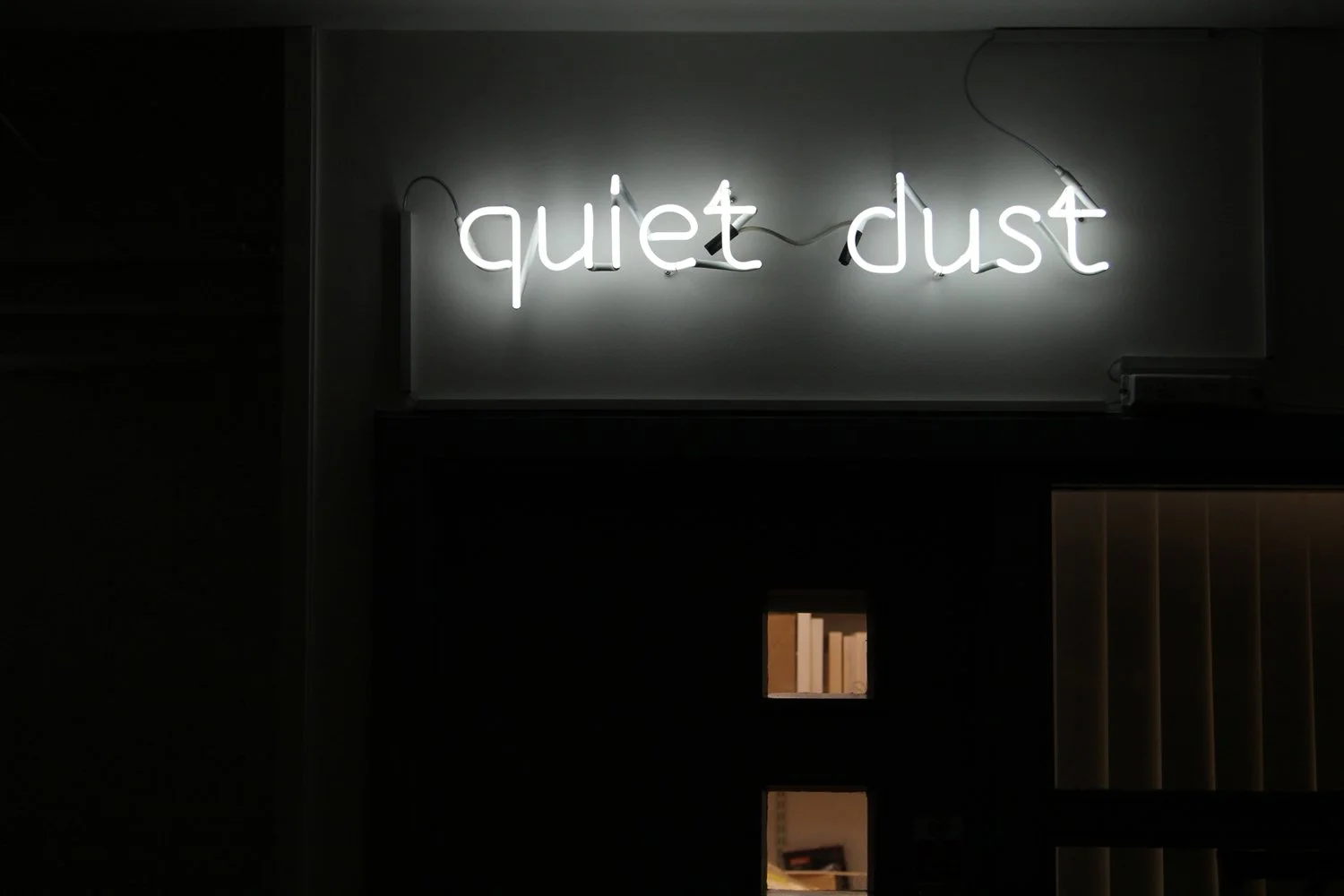
Quiet Dust is a neon artwork commissioned for Wildness Between the Lines, an exhibition curated by Nick Cass at Leeds Arts University, which brought together contemporary responses to the writing of the Brontë sisters. The work responds to the Red Room in Charlotte Brontë’s Jane Eyre, approaching the literary space as a psychological and spatial environment shaped by memory, confinement, and projection. Through this approach, the project treats text as a site, translating a fictional interior into a contemporary material form.
The work developed through a process of close reading and spatial interpretation, isolating the phrase “quiet dust” and reproducing it as a ghostly neon text. This act of extraction and translation transforms language into a physical presence, allowing the literary space to be re-encountered as an installation. Positioned within the exhibition context, the work extends my site-responsive methodology into a literary register, demonstrating how narrative, space, and atmosphere can be activated through minimal but spatially precise intervention.
-
![People walking and talking inside an underground art gallery with white walls, ceiling, and concrete floor. Some individuals are looking at their phones, and a group is engaged in conversation near a white partition with a photograph of stairs on it.]()
VAPAAN TAITEEN TILA
FUNDED WITH AN A-N BURSARY
HELSINKI, FINLAND
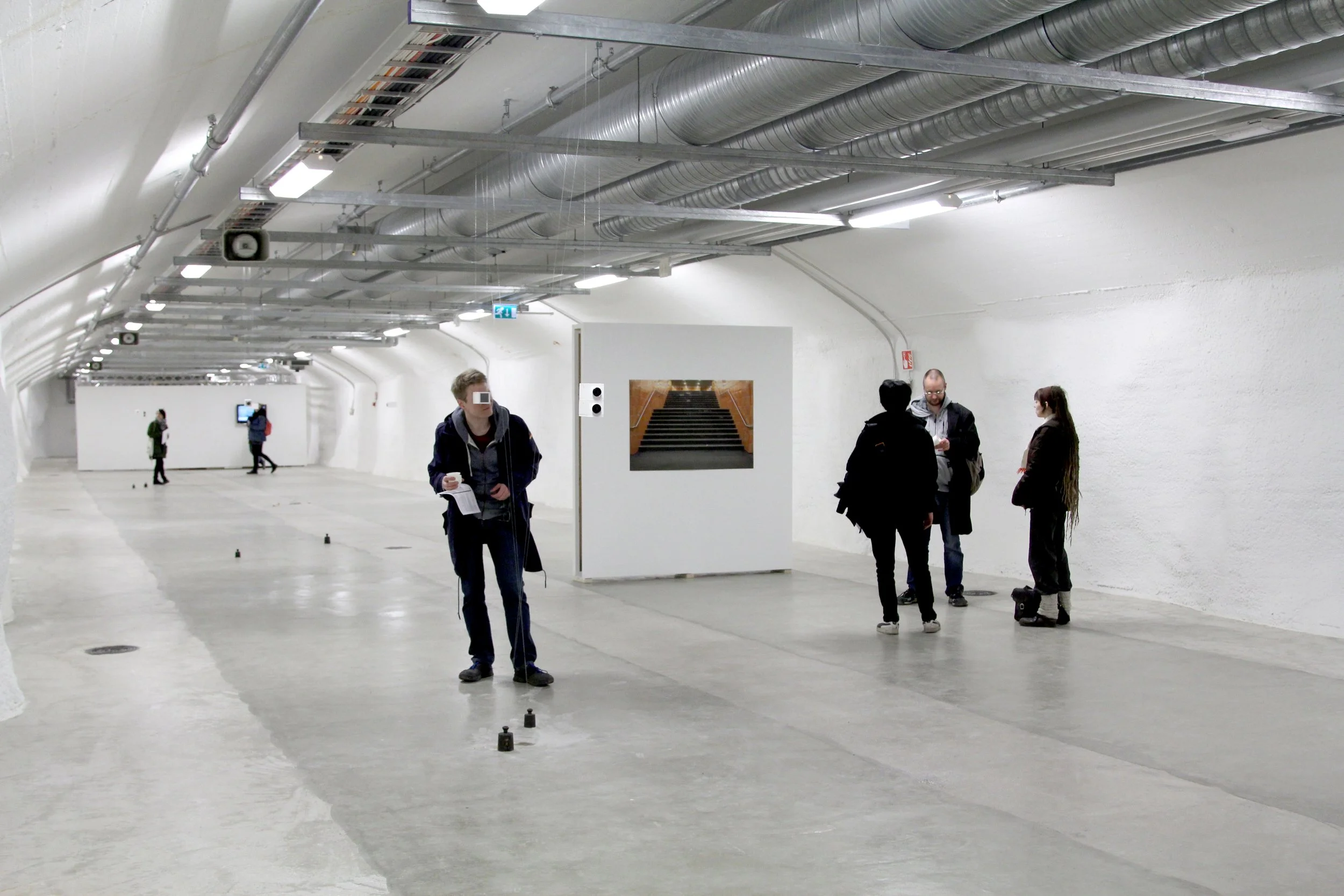
This residency, undertaken in collaboration with artist Flis Holland, responded to Vapaan Taiteen Tila, a subterranean former bunker in Helsinki, as a site shaped by architecture, memory, and historical use. The project explored the relationship between place and embodied experience, engaging with the bunker as a spatial and atmospheric environment. Working within the underground structure, the residency positioned the site as a layered context through which existing works could be reinterpreted.
Rather than producing new work, the project focused on curatorial and spatial decisions, presenting existing artworks in direct dialogue with the architecture of the bunker. Through placement and sequencing, the works were reconfigured to respond to the site’s material conditions and psychological intensity. This approach demonstrates how site-responsive practice can operate through curation, using space as an active framework to shape meaning and audience experience.
-
![A woman standing inside a dark room, viewing a large screen displaying an empty waiting area with rows of black chairs and a tiled ceiling.]()
THE DEADPAN EXCHANGE
CASA MAAUAD, MEXICO CITY, MEXICO
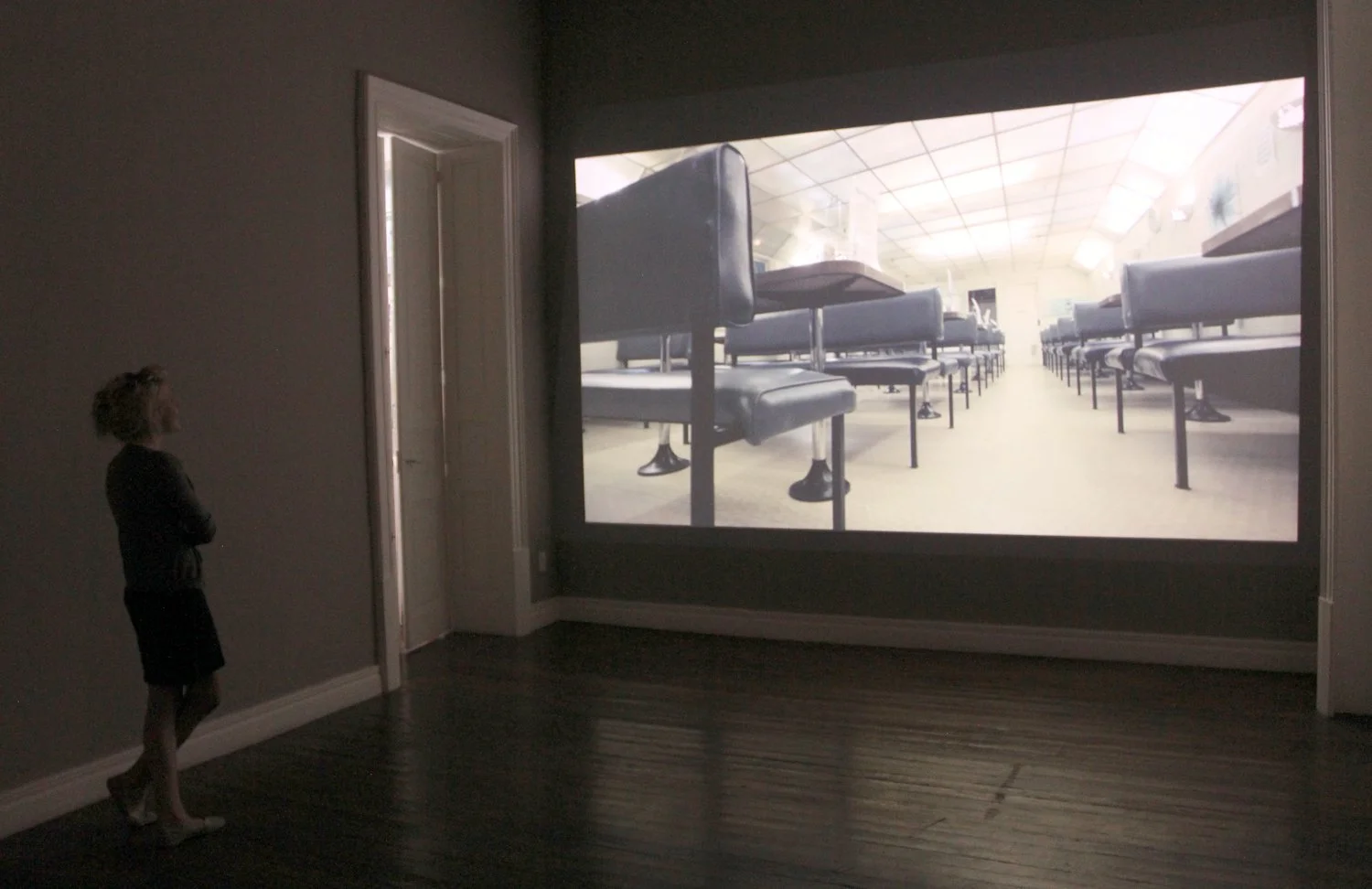
The Deadpan Exchange was a curatorial project developed as part of an international programme initiated by Heidi Hove and Jonn Herschend, exploring deadpan aesthetics and humour through an ongoing exchange between artists. Structured as a relay, the project invited artists from different countries to respond to one another’s work, creating a chain of reinterpretation across contexts. Situated within this framework, the project examined how meaning shifts through repetition, translation, and recontextualisation.
The curatorial approach focused on selection, sequencing, and dialogue between works, positioning each response in relation to those that preceded it. Rather than producing new work directly from site, the project operated through exchange and reinterpretation, using exhibition as a space for cumulative meaning-making. This approach demonstrates a curatorial methodology grounded in responsiveness and critical framing, where artworks are activated through context, relationship, and iteration.